Blueberry Eye Treatment — Most Forms Never Reach Eye Tissue. The Right One Does.
Not all blueberry reaches eye tissue. Without the right criteria — form, extraction, dose — nothing changes. Dr. Ming Wang explains exactly what the research points to.
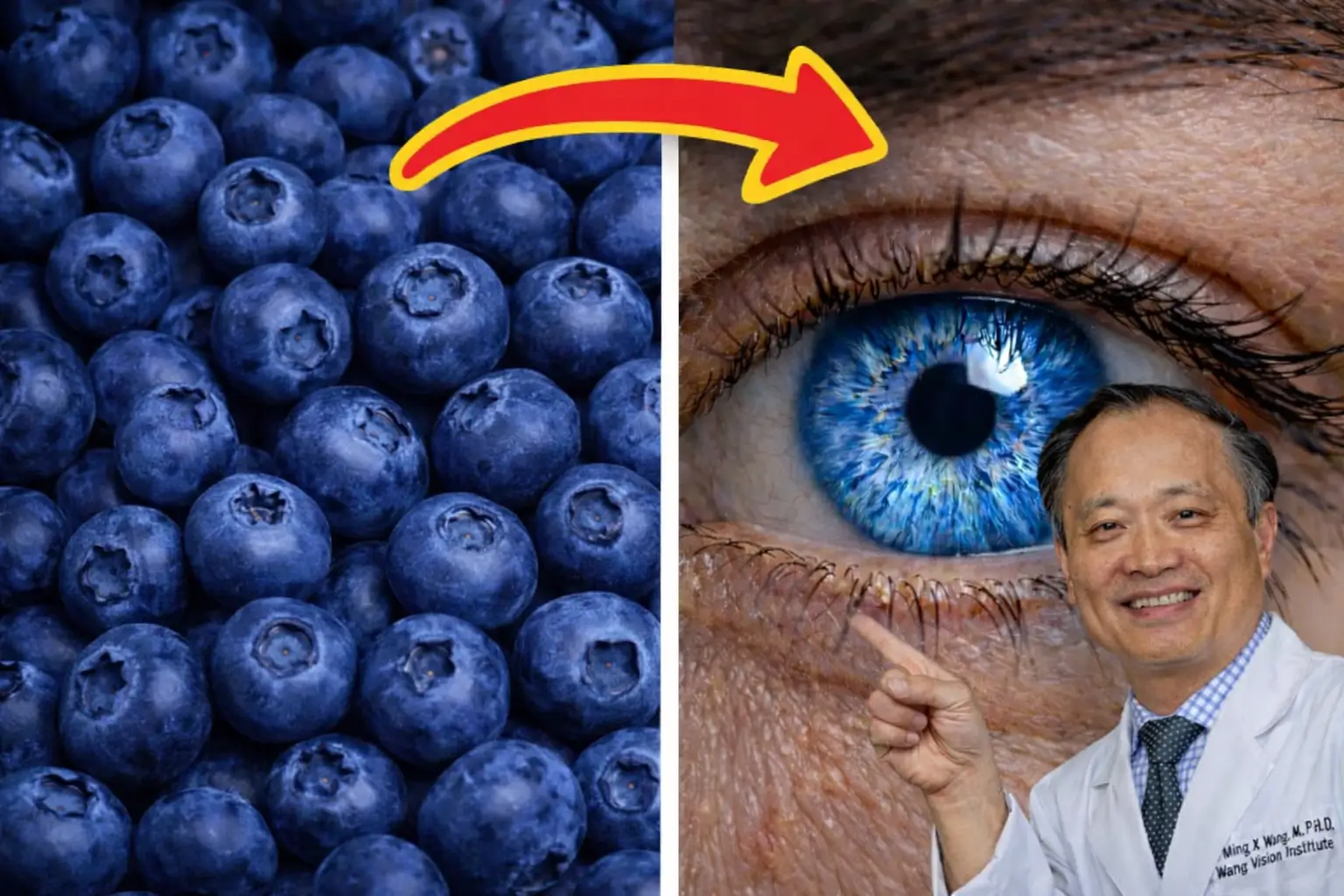
"Most people ignore the early warning signs. By the time they can't drive at night — it's already been building for months."
Watch the Blueberry Eye Protocol →If you're searching for a Blueberry Eye Treatment, the fog, glare, and slow refocus are already familiar. The key question is whether the active compounds reach eye tissue — most forms don't. Dr. Wang explains the exact criteria.
Do any of these feel familiar?
- Blurry focus that comes and goes — especially in low light or when switching between distances
- Night glare, halos, or headlights that look like a starburst — and the quiet fear that nighttime driving is becoming dangerous
- Slow refocus when switching from near to far — taking longer than it used to
- Morning fog that won't fully clear — a haziness that sits over everything until mid-morning
Standard treatments manage the surface. The drops keep the eyes comfortable. The glasses compensate for what's already lost. But the damage underneath keeps building — because nothing is going after the actual cause. The Blueberry Protocol goes after what's actually driving it.
The hidden factor most people miss
- What's happening Chronic inflammation and oxidative stress compromise the microcirculation feeding eye tissue — causing the depletion behind fog, glare, and slow refocus.
- What can help Dark-blue compounds from specific blueberry varieties have shown, in published research, an ability to reach tissue inside the eye directly — not just circulate in the bloodstream.
- Why most products miss Variety, extraction method, and concentration threshold all determine whether the active compound survives into the final product — or gets lost before it does.
The pattern Dr. Wang kept seeing — and what finally changed
For over fourteen years, Dr. Ming Wang saw the same story repeat in his clinic. Patients arriving with fog, night glare, and slow focus. Trying drops. Getting new prescriptions. Coming back six months later with the same symptoms — a little worse, a little more resigned to it.
That's what pointed him toward the specific compounds in certain blueberries — ones that research showed could actually reach tissue inside the eye, not just pass through the bloodstream.
A few weeks in, I was driving at night all week without even thinking about it. The morning fog was mostly gone. I'd been dealing with both for almost two years — tried three eye drops, got two new prescriptions, still gripping the wheel every time a car passed at night. A colleague mentioned this presentation. I watched it, started the blueberry protocol Dr. Wang explains. I don't understand all the science behind why it works — but I know what changed.
Why conventional eye care can't fix what blueberry compounds address directly
Wilmer Eye Institute — Johns Hopkins Hospital
Independent research from one of the world's leading ophthalmology centers examined the dark-blue compounds in specific blueberry varieties and their interaction with retinal tissue. The findings point to a mechanism conventional treatments don't address — and it's what the protocol is built on.
Clinical references ↓
- REF Kalt W. et al. (2014) — J Agric Food Chem — Dark-blue compounds in blueberry varieties and retinal tissue under oxidative conditions. PMID 24476468
- REF Tremblay F. et al. (2013) — Invest Ophthalmol Vis Sci — Dark-blue berry compounds and ocular microcirculation support. PMID 23132806
- REF Gopinath B. et al. (2011) — Am J Clin Nutr — Dietary dark-blue compound intake and visual function outcomes. PMID 21508090
Ophthalmologist
What the presentation covers — in plain terms
- 1 What acting now looks like vs. waiting. Dr. Wang has seen both outcomes. The difference comes down to one decision — and the window doesn't stay open.
- 2 Why the fog and glare keep returning even after drops, new glasses, and supplements — and the one variable that determines whether it actually stops.
- 3 What makes the specific blueberry form different — and why the extraction method is the only thing that determines whether any of it reaches the tissue causing your symptoms.
Frequently asked questions
-
What exactly is the "Blueberry Protocol"?
A routine built around dark-blue compounds from a specific blueberry variety — not standard grocery-store blueberries. Dr. Wang covers the exact criteria in the presentation.
-
Aren't all blueberry supplements basically the same?
No. The research was conducted with specific concentrations from particular varieties — variety, extraction method, and concentration threshold all matter. Dr. Wang explains the criteria in the presentation.
-
What causes night glare and blurry focus — is it just aging?
Not just aging. The research points to chronic inflammation and oxidative stress compromising the microcirculation that feeds eye tissue — causing depletion that worsens over time. Dr. Wang explains the mechanism in the presentation.
-
What if I already use drops or prescription glasses?
Drops and glasses manage the surface — they don't address the underlying tissue depletion the research points to. Dr. Wang explains that gap in the presentation.
-
Why do most blueberry products fail to have an effect?
Most extracts use standard varieties at concentrations below the threshold the research used — so the compound never reaches eye tissue. Dr. Wang covers what to look for in the presentation.
-
How long does it typically take to notice a difference?
Results vary based on how long the depletion has been building. The presentation covers what acting early vs. waiting actually looks like — Dr. Wang has seen both outcomes.
-
Does the variety of blueberry really matter that much?
Significantly. The dark-blue compound concentration varies dramatically by variety and growing conditions — the varieties in the research are not standard commercial blueberries. Dr. Wang explains the specific criteria in the presentation.
-
What if I've been dealing with these symptoms for years?
The longer it continues unchecked, the narrower the window. Dr. Wang addresses this directly in the presentation.
-
Are blueberry and bilberry the same thing?
Different plants, different compound profiles. What the research identifies is the standardization criteria — variety, extraction method, and dose threshold — not the common name on the label. Dr. Wang covers exactly what to look for in the presentation.